On January 19, a section of the Potomac Interceptor Pipeline collapsed near the Clara Barton Parkway and the I-495 interchange. The 54-mile sewer pipeline transports wastewater from Northern Virginia and suburban Maryland to the Blue Plains Advanced Wastewater Treatment Plant in Washington, DC.
The broken pipe, which measured roughly six feet in diameter and is estimated to have an average flow of 40 million gallons of untreated sewage a day, caused an overflow into the C&O Canal National Historical Park, before then entering the Potomac River.
DC Water, which owns and operates the pipeline, has constructed a bypass pumping system to contain most of the overflow, which is capturing and rerouting wastewater around the collapsed interceptor segment, while repairs proceed. DC Water is also testing the river for E. Coli and reporting results on its website. Officials note that drinking water is safe and not impacted by this incident.
Rehabilitating the pipeline, which was originally constructed in the early 1960s, is a high priority DC Water project. It is estimated that the rehabilitation project will take about 10 years and cost approximately $625 million.
COG Memo: Regional Sewer Infrastructure, Water Quality, and Ongoing Repair Work
External Resources
DC Water
DC Department of Energy and Environment (DOEE)
Maryland Department of the Environment (MDE)
Virginia Department of Health (VDH)
Additional Summary Information
DC Water Response to the Collapse
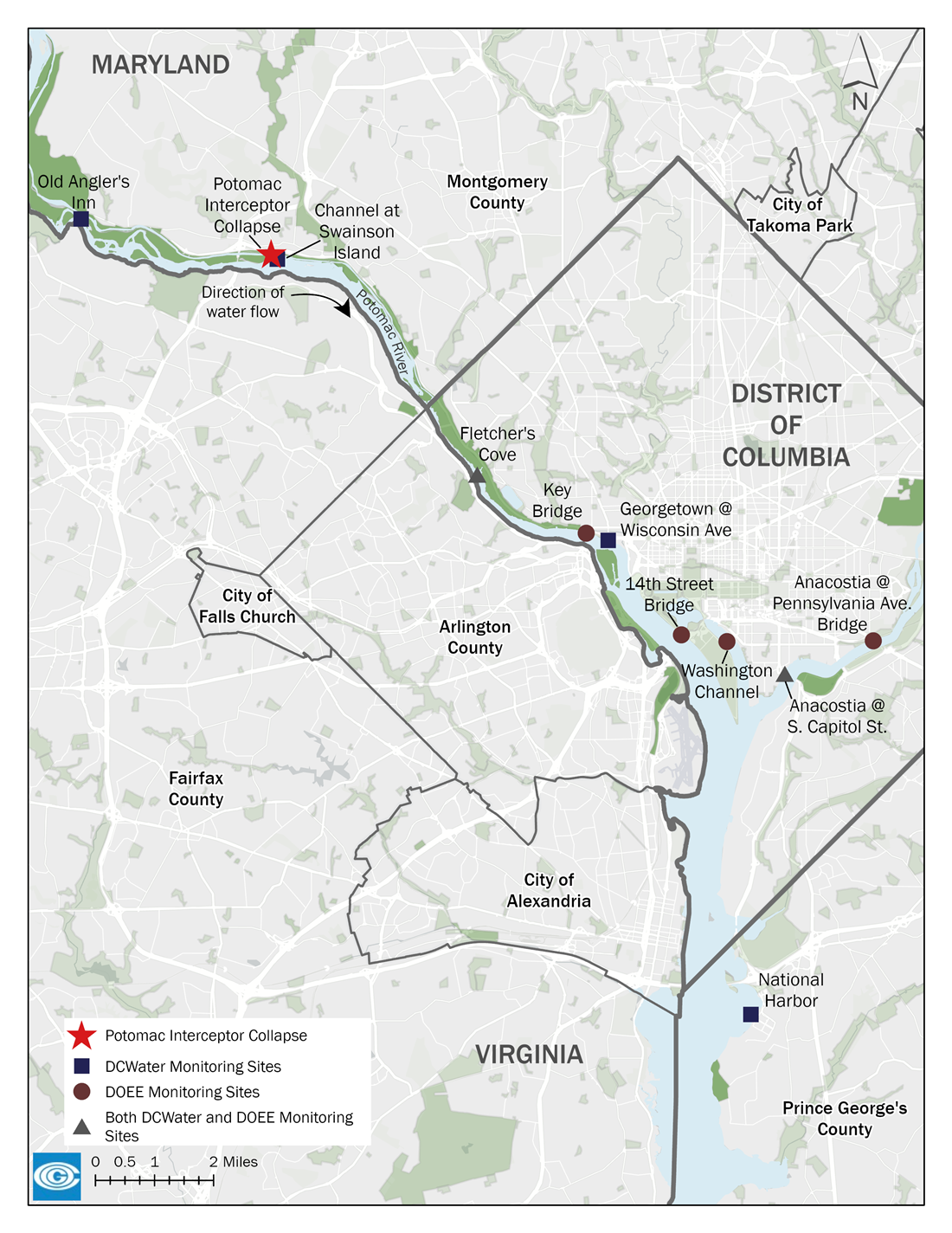
Water Sampling Locations
Advice to the Public
COG Coordination Activities
DC Water Response
Thus far, DC Water has completed numerous tasks that may be broadly summarized, as below:
- Has constructed bypass pumping systems to contain most of the overflow.
- Is capturing and rerouting most of the wastewater with bypass pumping systems around the collapsed interceptor segment during repairs.
- Is monitoring bypass systems 24/7.
- Is conducting daily water quality sampling.
- Has stood up a dedicated DC Water webpage for information on the Potomac Interceptor Collapse.
- Is developing an Environmental Restoration Plan with federal, state, and local regulators.
Water Quality Sampling
- Utilizing a contracted environmental firm and certified laboratory, DC Water initiated daily sampling for E. Coli, an indicator bacterium, at six locations beginning on Jan 29, 2026. To assess water quality conditions, sampling locations included the overflow area as well as upstream and downstream sites.
- Visit the DC Water web page for the latest water quality sampling results.
- Visit District Department of Energy and Environment web page for additional testing data.
Advice to the Public
Area environmental and health officials note that the pipeline collapse has had no impact on the region’s drinking water. All active drinking water intakes are located upstream of the collapse site. Regional drinking water utilities treat Potomac River water through filtration and disinfection processes before distribution.
The public is reminded to avoid contact with untreated sewage as it may carry bacteria and viruses. Anyone who comes in contact with the wastewater overflow should:
- Leave the area immediately.
- Wash exposed skin thoroughly with soap and clean water.
- Disinfect any affected areas or items.
- Do not consume food or water that may have been exposed.
- Seek medical attention if symptoms occur.
The District, Maryland and Virginia have issued incident notifications, advisories and shellfish closures.
The region’s water utilities encourage residents to avoid flushing ANY wipes or non‑disposable items, as these materials can interfere with pumping operations during emergency response and repair activities.
Residents can also report suspected fish and wildlife injuries related to the incident to the District or Maryland.
COG Coordination Activities
COG is working with its member governments and partners on the following coordination activities to support the region’s response to the sewer pipeline collapse.
- Providing briefings and updates across jurisdictions, including planning the first regional briefing of officials from the District, Maryland, and Virginia.
- Aligning and amplifying messaging across jurisdictions (e.g., safe drinking water, health advisories, wipes guidance, and PI resilience investments);
- Coordinating water quality monitoring activities across jurisdictions (e.g., state and local governments, University of Maryland)