Data centers have been around for decades, and without them, many features of modern life would not be possible. That includes texting, emailing, and streaming, which are made possible by cloud computing. It also includes critical local government functions such as public safety, utilities management, and citizen services that depend heavily on data centers. What’s changed is that the AI boom has rapidly accelerated data center development, prompting more conversations about how they impact the communities and landscapes around them.
The metropolitan Washington region is at the center of this technology ecosystem because the largest concentration of data centers in the world is located in Northern Virginia, and developers want to build more across the region. Local governments—some for the first time—are evaluating the economic benefits of data centers against concerns like aesthetics, higher utility bills, and strains on local infrastructure.
In response, COG launched a three-part Data Centers in the DMV series to bring together area elected officials, government staff, agency and industry leaders, and subject matter experts. The first two events held in February and March focused on energy and water, and the third event later this spring will focus on land use and economics.
Data centers were also a featured topic at the March meeting of the COG Board of Directors, where staff presented highlights from the series to date.
District of Columbia Councilmember Charles Allen and other members expressed concerns regarding data centers’ impact on rising utility costs for residents and businesses, even for jurisdictions where there are no data centers. The land use forum will convene experts to discuss policy opportunities for this nuanced issue, which includes other factors such as energy consumption—not solely by data centers—inflation, water usage, sound, and upgrades to aging infrastructure.
The Board also brought up other topics that will be covered in the next forum, such as siting and zoning, balancing land use with community benefits, and tax incentives.
Loudoun County Board of Supervisors Chair Phyllis Randall cautioned against having conversations of “all good and all bad” and offered to share the lessons that Loudoun has learned. Montgomery County Council President Natali Fani-González attested to the benefits of this, sharing how she drafted a zoning update for her county, “I did it based on best practices around the region. I looked at Loudoun’s, I looked at Prince George’s, I looked at Frederick’s, and I said, ‘What is it that I do not want to do?’”
Several board members asked for continued research on the environmental impacts of data centers, including greenhouse gas emissions, and air and water quality.
Below are some of the key takeaways from the energy and water forums:
1. Demand for data centers is growing at a fast pace.
In the next five years, consumers and businesses are expected to generate more data than in all of the past decade.
In Virginia, data centers currently account for 4 gigawatts of energy capacity, but Dominion Energy is preparing for 25 gigawatts of demand by 2031 and 45 more gigawatts of demand for projects without connection dates.
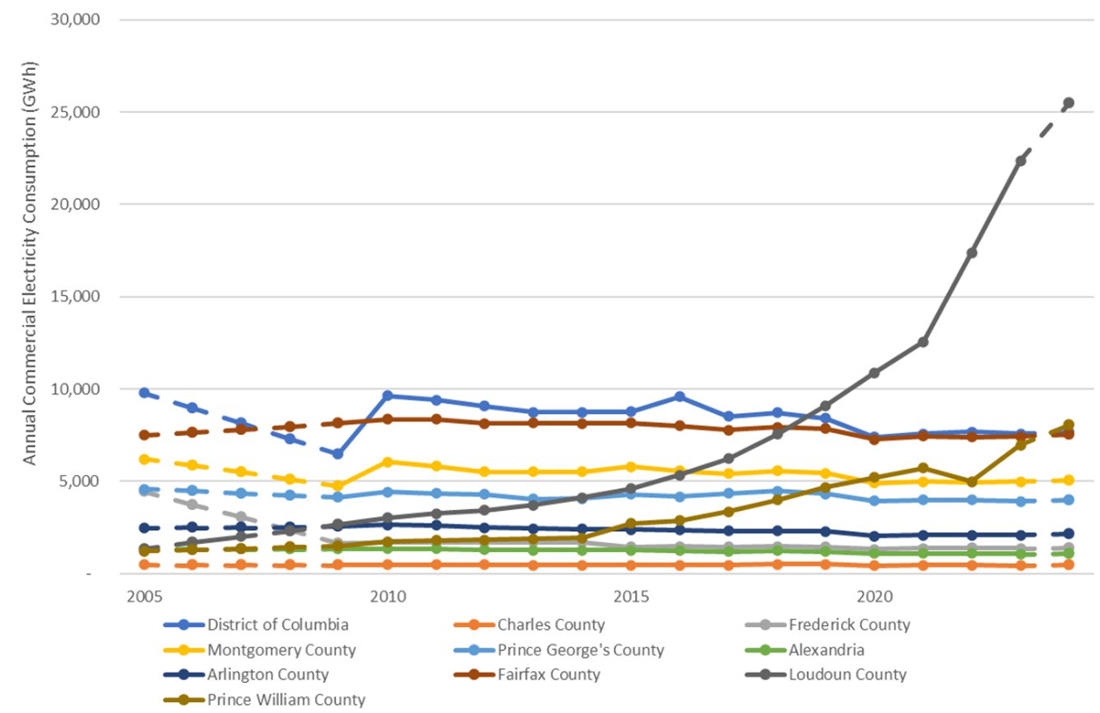
Graph showing annual commercial electricity consumption in the metropolitan Washington region.
2. The region must continue investing in infrastructure to meet growing demand.
Data centers require near-constant energy at a different scale than other commercial users. In order to maintain the reliability of the grid, stakeholders have to prioritize modernizing transmission lines and exploring options for backup power and storage. The grid is also at capacity, requiring data centers to build their own off-grid power generation. Future energy needs are uncertain and will be affected by computer chip and server advancements and improvements to battery storage.
When it comes to water, the amount that data centers use is highly variable. Short durations of high demand place the highest strain on existing infrastructure, and the amount of use depends on factors like cooling technology, climate, and operations. These unknown variables can make planning challenging.
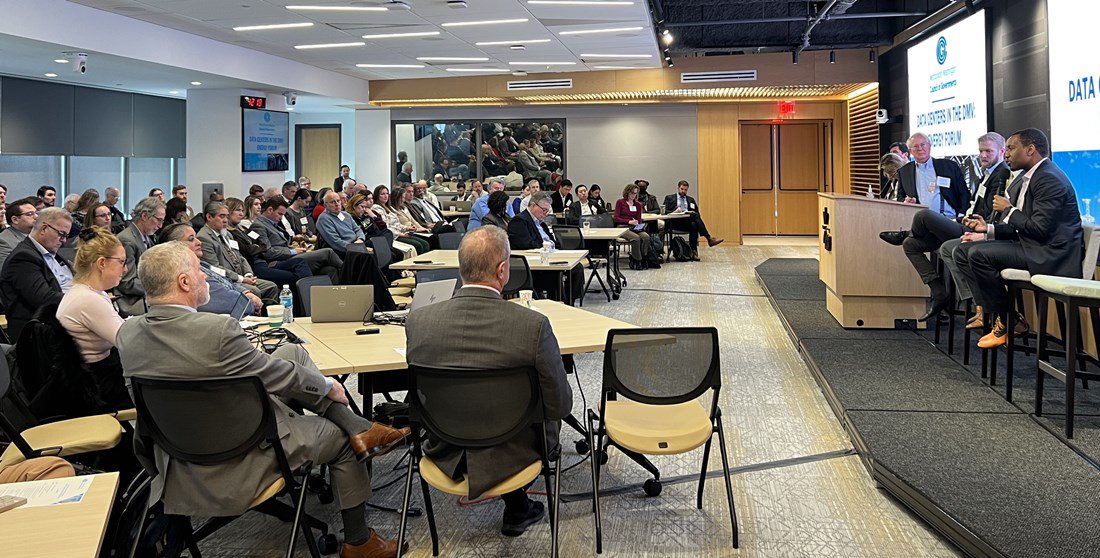
Panelists at the energy forum discuss projected data center growth and energy requirements.
3. Early engagement and transparency are critical.
Experts note that it is beneficial for local governments to engage with state legislatures, utilities, and public service commissions before land use and economic development decisions are finalized.
Moreover, accurate and consistent data sharing informs planning projects and counters distrust by making government actions verifiable and evidence-driven.
4. Ongoing regional coordination is essential.
Coordinated regional planning enables economic growth while safeguarding the long-term reliability of infrastructure that crosses jurisdictional boundaries.
For example, the Potomac River is a shared and valuable resource. Regional coordination regarding the river is essential because while individual projects may appear manageable, cumulative demands coupled with shifting precipitation could pose a risk to the region’s water supply.
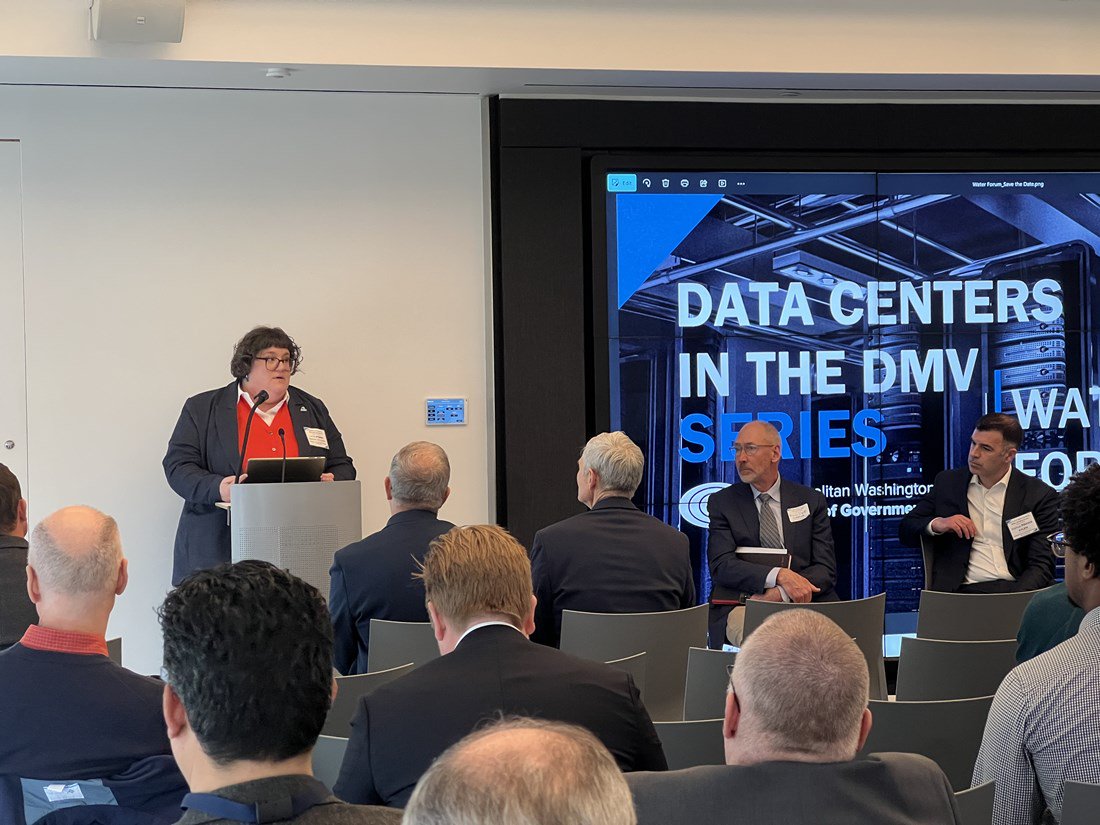
City of Greenbelt Council Member Jenni Pompi provides closing remarks at the water and data centers forum.
It is also important to coordinate with critical infrastructure sectors, such as emergency management, WMATA, hospitals, and public safety. For instance, without data center developers collaborating with other sectors on electric power transmission upgrades, backup protocols, or load management, a single grid event could cascade into transit shutdowns affecting hundreds of thousands of people.
The above examples also demonstrate why policy coordination is necessary. Neighboring jurisdictions all benefit when accurate water usage projections are required from data centers. Building new transmission lines often means dealing with multiple local governments that must enter into conversations about land use and approvals.
5. Environmental impacts are a key part of discussions.
There are several categories to consider regarding the environmental impact of data centers: high electricity consumption and carbon emissions, high water usage for cooling, air pollution from backup power and onsite generation, land use and impervious surfaces that increase stormwater runoff, and electronic waste.
Moreover, since the grid is at capacity, it could take years to get connected, requiring data centers to consider building their own off-grid power plants. To offset their emissions, some companies take climate pledges promoting the use of clean energy, and this has driven investment in solar through Power Purchase Agreements (PPAs). This is because solar is expensive to build, but when data centers sign long-term PPAs to buy electricity from solar farms, it reduces the financial risk.
To further offset their impact, some companies also work with local governments and community partners to build more solar than they need for their data centers. For example, in Virginia, Dominion Energy plans to develop enough solar energy to power 4 million homes.
Tracking progress toward the region’s climate goals will depend on information sharing between local governments and data centers.