Trucking, freight rail, pipelines, air cargo, and cargo ships…when one thinks of Washington, DC, these five modes are likely not the first to come to mind despite the integral role they have in the National Capital Region’s transportation network. Whether it’s tractor trailers delivering food to local groceries, smaller trucks bringing new furniture to households, coal being shipped over rail, or online customers stepping onto their front porches to retrieve recently ordered packages, freight is a critical—if often unnoticed—element of the National Capital Region’s economic vitality, connectivity, and livability.
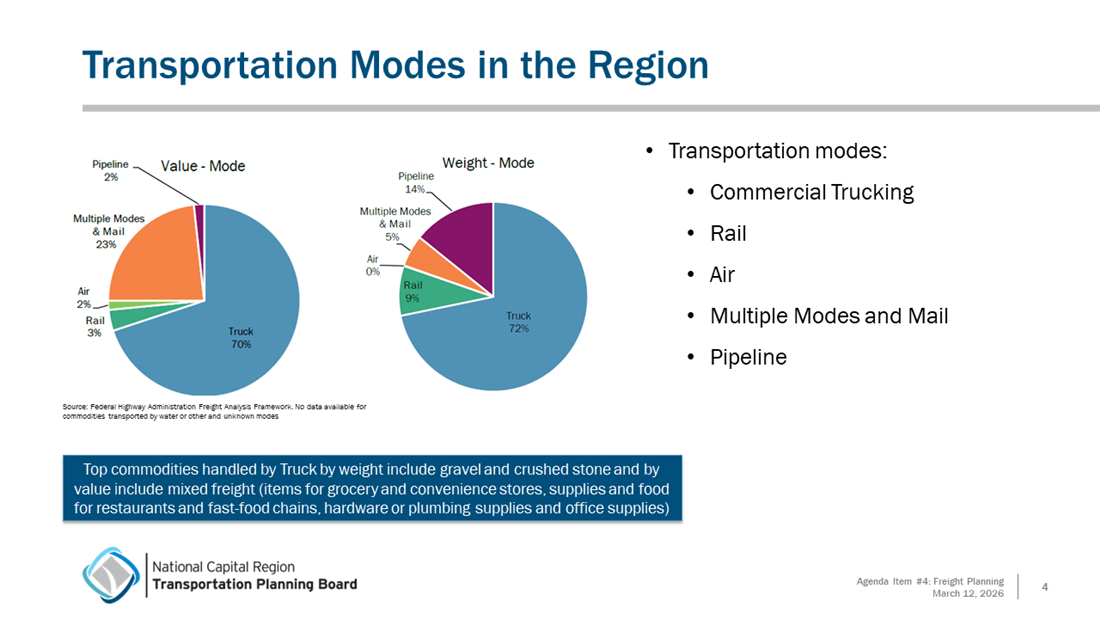
According to the 2023 National Capital Region Freight Plan, which will be updated later this year, trucking accounts for approximately 73 percent of total freight transported by weight, followed by 22 percent transported by pipeline, three percent transported by rail, and two percent transported by multiple modes. Truck movements use 17,000 lane miles of roads and highways in the region. Two Class 1 railroad lines operated by CSX Transportation and the Norfolk Southern Corporation have over 250 miles of mainline track that carry more than 6.7 million tons of local freight annually, including coal and grain.
Washington Dulles International Airport and Baltimore Washington International Thurgood Marshall Airport, the region’s two major cargo airports, process over 460,000 metric tons of total cargo annually (2024 ACI-NA Airport Traffic Report). Typical examples of air cargo for this region include pharmaceuticals, computer chips and electronic components, medical supplies, automotive parts, documents, and time-sensitive, perishable commodities such as flowers, fresh fruits, and fish.
A pipeline network carries more than 48 million tons of freight per year, of which 89 percent is classified as “Other Petroleum Products”. While there are no port facilities within the immediate metro area, Baltimore and the Virginia Beach-Norfolk-NC ports serve as primary ports for inbound and outbound maritime goods movement.
TPB’s role in coordinating regional freight planning
COG and the TPB maintain a comprehensive Freight Planning Program that includes a TPB Freight Subcommittee, participation in regional and national level freight groups, and freight stakeholder outreach. Committee members include representation from local and state governments, other metropolitan planning organizations (MPOs), industry groups, and private sector representatives (i.e., railroad companies, parcel delivery companies).
The Freight Subcommittee’s inaugural meeting was held in April 2008, and in July 2010, the TPB approved the first National Capital Region Freight Plan. Freight planning is ongoing and ever-changing as consumer behavior, manufacturing practices, and the global economy influence the supply and demand of goods. As a result, freight subcommittee members and TPB planners look for opportunities to learn and coordinate around freight planning challenges.
Committee meetings provide an opportunity to understand the broader scale of freight challenges and how freight interactions in our region influence flows across the larger freight transportation system, which in turn inform the TPB’s planning actions. The meetings also offer the chance to highlight regional freight concerns to other stakeholders.
Visiting the Port of Baltimore to better understand the regional supply chain
On May 13, members of the TPB Freight Subcommittee and staff from TPB’s Multimodal Planning team joined host Maryland Port Administration for a guided drive-through of the Dundalk Marine Terminal in Baltimore. The site visit provided an overview of port operations, including how a range of international and domestic cargo is handled, such as automobiles, large farm equipment, helicopters, and containerized goods, including furniture, dry food products, and other consumer items.
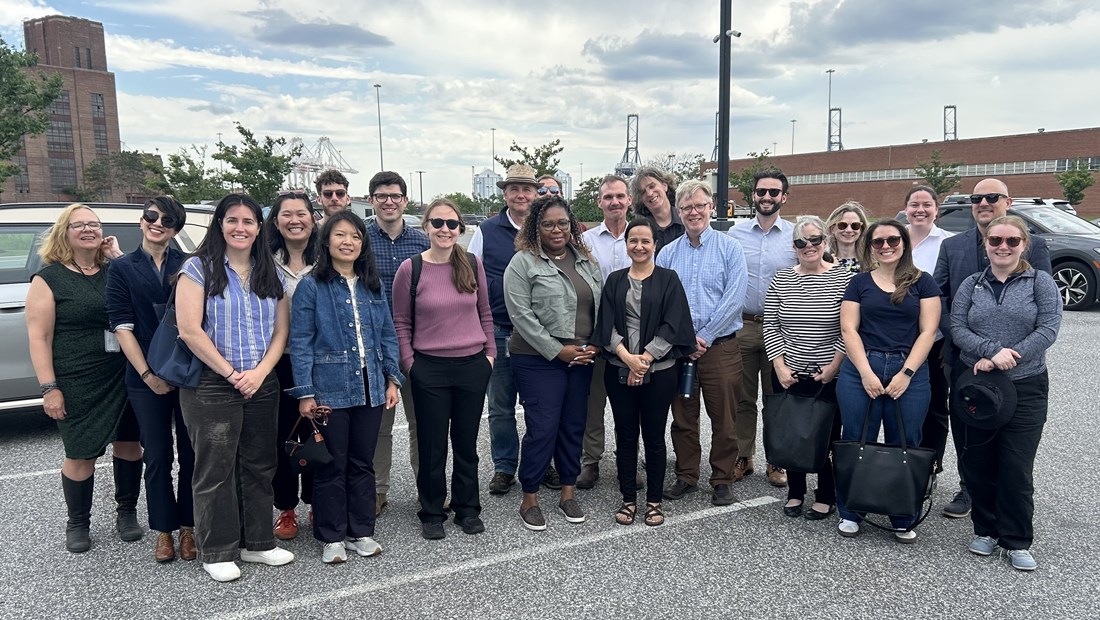
TPB Freight Subcommittee members, Maryland Port Administration staff, and TPB Multimodal Planning team members visit the Port of Baltimore on May 13, 2026 (Maryland Port Administration)
Participants also learned about the port’s ongoing investments in decarbonization, climate adaptation, and clean energy initiatives to support a more sustainable and resilient freight network. The visit was capped with a networking opportunity at the Baltimore Metropolitan Council (BMC) with members of their Freight Movement Task Force, fostering regional collaboration and knowledge exchange.
District DOT Freight Branch Manager Samuel Brooks, who participated in the May event, commented that freight is a regional and national system, and opportunities for regional cooperation and idea-sharing support the development of the Mid-Atlantic region.
“The Port of Baltimore tour allowed a unique opportunity to bring together the staff of our two metropolitan regions,” said Brooks. “Touring this integral facility provided the DDOT Freight team with new insights to the interconnected supply chains of Baltimore and Washington, DC, as well as fun facts such as Baltimore is the largest importer of coffee for Starbucks!”
Hot freight topics & challenges
The geographic diversity of the National Capital Region and its relationship to the Mid-Atlantic freight network result in freight challenges that are similar to other parts of the country yet diverse due to subregion characteristics. When asked about freight challenges in the region, TPB planners commented that congestion is a perennial issue as the delays caused by congestion result in increased costs for suppliers and delays for delivery recipients.
Beyond congestion, three specific freight topics affecting DC, suburban Maryland, and Northern Virginia are:
Curbside Management
In the District, the City of Alexandria, Arlington County, and other areas with higher density, curbside management is a challenge as the number of uses for the curb has expanded (e.g., bicycle lanes, bus lanes, Uber and Lyft drop off/pick-up, freight loading/unloading, and streeteries) while curb space has remained the same. Trucks, which deliver over 70 percent of cargo by weight and value in our region, are having to compete for space to load and unload cargo and fulfill their deliveries.
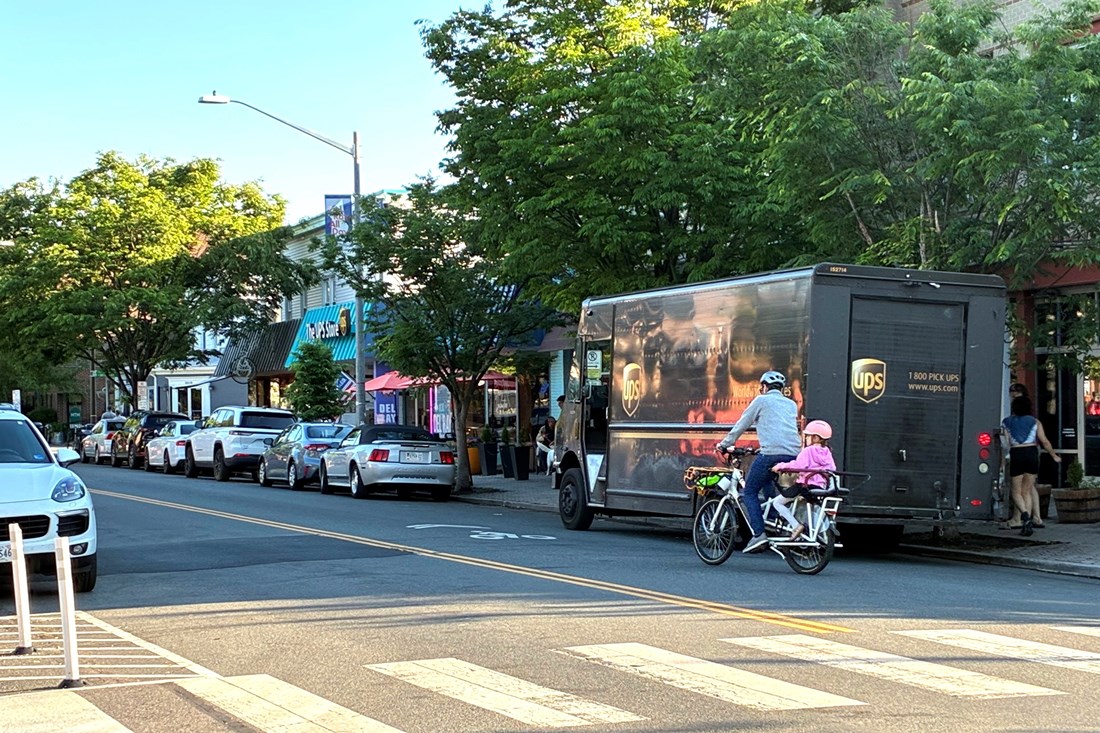
Curbside freight pick-up and delivery in Alexandria, VA (COG)
Last-mile delivery
The final leg of the supply chain where a package is delivered to its destination has also become a focus for creating more efficiencies, especially in dense areas, and TPB jurisdictions see last-mile delivery as an opportunity to enhance sustainability. This has resulted in innovative freight pilots in the region such as delivery by e-cargo bikes and through microhubs—intermediate distribution centers that support delivery by bike, e-cargo bike, or foot.
Truck Parking Shortage
Regionwide and nationwide, there is currently a truck parking shortage. Because of insufficient parking, truck drivers park in areas not designated for them such as along off-ramps or residential neighborhoods, which creates safety risks for other travelers, as well as for the truck driver since those spaces may not be secure. The issue has raised questions about how to integrate freight land uses into land use planning.
All three of these topics are being approached at the state and local level through planning and policy development. With TPB serving in a coordination role, state, city, and county practitioners join together with the private sector to share their initiatives through committee presentations and forums such as the August 2024 Curbside Management Forum.
What’s ahead for freight planning in the region
TPB planners are currently in the process of procuring consultant support to update the 2023 Freight Plan, expecting to begin work this summer. The Freight Plan Update will take roughly a year to complete and will be presented to TPB board members for approval in 2027.
The TPB Freight Subcommittee next meets on July 9 at 1:00 P.M. All are welcome to listen to the meeting live stream, which will be available on the committee page that day.
Stay up to date on the latest TPB freight information by subscribing to TPB News. For questions about freight planning in the region, contact Janie Nham, jnham@mwcog.org or Ceriann Price, cprice@mwcog.org.
Janie Nham, TPB Program Manager, Safety and Multimodal Programs, and Ceriann Price, TPB Transportation Planner, contributed to this TPB News Highlight.