From November 4–6, more than 120 law enforcement executives, researchers, and public safety experts from across the country and around the world gathered at the National Law Enforcement Officers Museum in Washington, DC, for the first-ever National Executive Forum on Public Order Policing.
Hosted by the Metropolitan Washington Council of Governments (COG) in collaboration with the Maryland-National Capital Region Emergency Response System (MDERS) and the Northern Virginia Emergency Response System (NVERS), the forum focused on the evolving challenges of public order policing, which involves specially trained units that manage crowds and de-escalate conflict at large events to maintain safety while protecting people’s constitutional rights to peaceful and lawful expression.
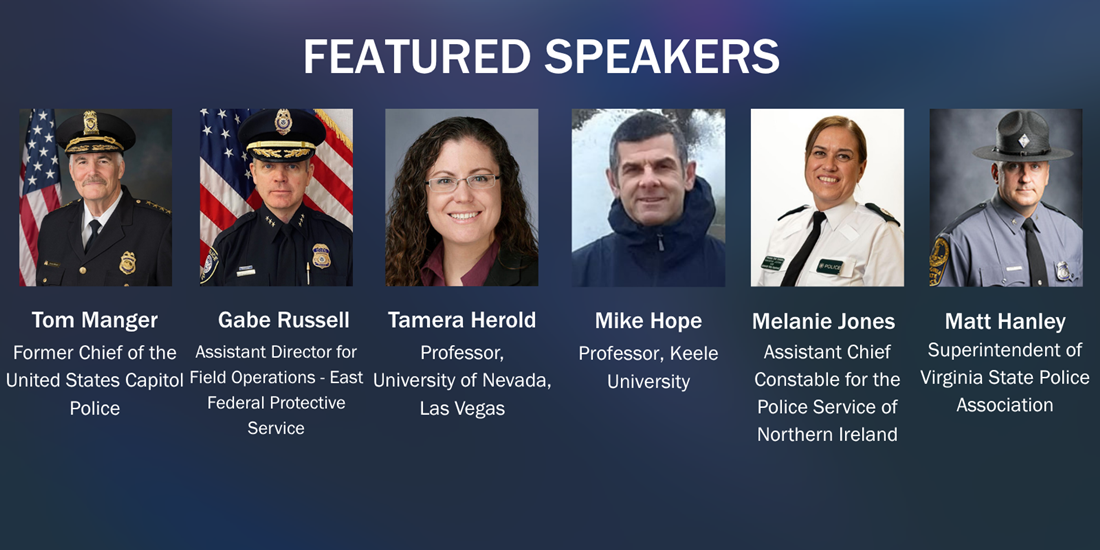
Day One: Foundations and Principles
The forum opened with a ceremonial presentation by a joint color guard and a performance by the DC Police Pipes and Drums, followed by welcoming remarks from COG Executive Director Clark Mercer, Pamela Smith, Chief of the Metropolitan Police Department (MPD) and Gabe Russell, Assistant Director for Field Operations – East, Federal Protective Service, who served as master of ceremonies throughout the three-day event.
In his address, Mercer underscored COG’s long-standing leadership in fostering collaboration among the region’s public safety agencies. “At COG, our strength lies in regionalism and collaboration,” Mercer said. “Our police, fire, EMS, and emergency managers plan, train, and respond together—because coordination saves lives.”
He also highlighted the importance of officer wellness and resilience, a recurring theme throughout the forum, noting that “our officers carry immense responsibility under extraordinary pressure, and their well-being must remain a top priority.”
Day One sessions focused on the foundational principles and ethics of public order policing. The opening keynote, delivered by Chief Tom Manger (ret.), former Chief of the U.S. Capitol Police, set the tone for the discussions ahead, emphasizing the role of progressive leadership in modern policing, including strategies that emphasize de-escalation, community trust, and evidence-based approaches to managing crowds safely. Panels explored legal and ethical dimensions of crowd management, the science of crime prevention and design, and innovations such as dialogue-based policing.
Day Two: Leadership and Strategy
The second day centered on command, leadership, and strategic innovation, with presentations on command structures, accreditation, risk assessment, and operational planning. Participants examined how agencies can strengthen leadership pipelines and prepare command staff for increasingly complex public order operations.
An early keynote on operational leadership perspective reinforced the importance of coordination, adaptability, and communication in high-pressure, multi-jurisdictional settings. The day concluded with an engaging session on police mountain bike operations—a practical example of mobility, visibility, and community engagement in managing large-scale events.
Day Three: Tactics, Recovery, and Future Readiness
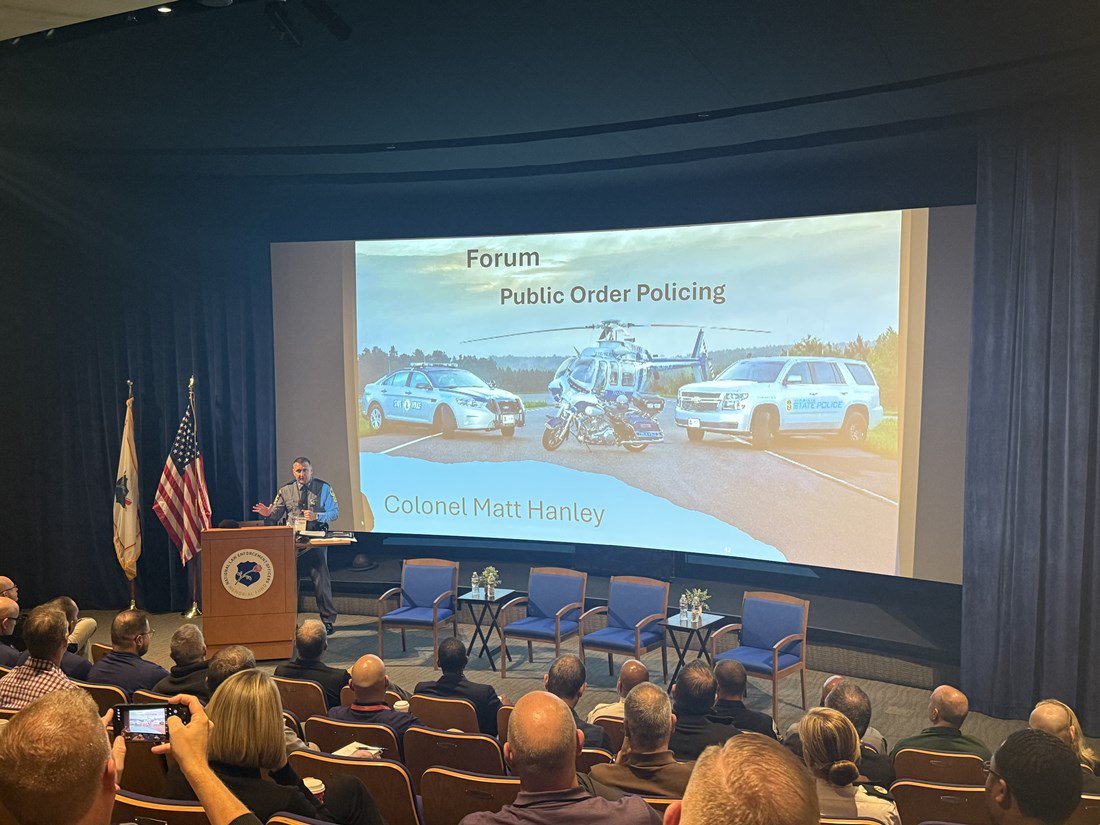
Lt. Colonel Matt Hanley, Superintendent of the Virginia State Police, delivering a keynote
The final day turned attention to tactical decision-making, recovery, and future readiness. Lieutenant Colonel Matt Hanley, Superintendent of the Virginia State Police, delivered a keynote on future challenges in public order policing, exploring how agencies can prepare for emerging threats and operational demands.
Sessions addressed responsible use of force, post-incident management, and the growing importance of officer wellness and mental health support within public safety organizations.
A special presentation on preparing for the 2026 FIFA World Cup was led by Professor Mike Hope, a retired UK police and football policing expert, and Cliff Stott, Professor of Social Psychology, Dean for Research in the Faculty of Natural Sciences at Keele University, and Director of the Keele Policing Academic Collaboration. Drawing from international experience, they outlined strategies for managing major sporting events with a focus on prevention, communication, and trust-building between police and communities.
Regional collaboration
Located just steps from centers of government, the Forum exemplified the power of regional collaboration and cross-sector partnership. COG extended special thanks to Gabe Russell for his leadership and skillful facilitation throughout the event, to local and federal partners including the Metropolitan Police Department, Montgomery County Department of Police, United States Capitol Police, United States Secret Service, Virginia State Police, and to MDERS and NVERS for their continued commitment to advancing regional preparedness.
Over three days, participants built connections, exchanged insights, and strengthened the professional networks that underpin policing across the National Capital Region and the United States.
The event underscored that the path forward lies in evidence, partnership, and shared learning, and affirmed that working together strengthens both public safety and public trust.